


Hello friends,
This is one of the most common equipment questions in shooting.
And also one of the most misunderstood.
Shooters spend months adjusting grip, pellets, stance but the rear sight quietly controls something far more important: how easily the shot can happen.
Let’s make it simple.
There is no universally correct rear sight width.
There is only the width that allows you to recognize alignment instantly and release the trigger without hesitation.
If the sight picture looks beautiful but the shot delays, the setting is wrong.
What a Narrow Rear Sight Really Does
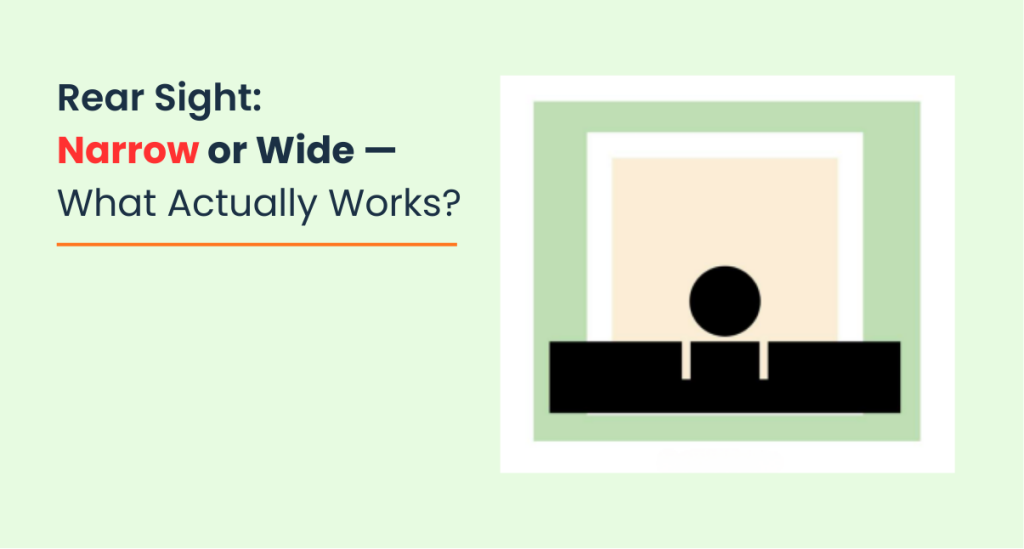
A narrow rear sight creates very thin light bars on each side of the front sight.
At first glance, this feels precise.
• The front sight appears locked into position
• The picture looks sharp
• It feels controlled and professional
Advantages
• Extremely clear alignment reference
• Feels stable during calm practice
• Satisfying visual precision
The Hidden Cost
The brain starts chasing perfection.
You wait.
You refine.
You hold a fraction longer.
Then the trigger stalls.
Under match pressure, this becomes worse:
• Eye strain increases
• Urgency rises
• Movement feels dangerous
So, the shooter interferes.
The result is familiar:
• Beautiful practice groups
• Unpredictable competition shots
The setting improved appearance, not execution.
What a Wide Rear Sight Really Does
A wider rear sight shows more light around the front sight.
Initially, most shooters dislike it.
• The picture looks loose
• It feels less controlled
• Almost careless
But something important changes the brain stops trying to freeze the gun.
Advantages
• Faster alignment recognition
• Easier trigger movement
• More stable rhythm
• Better tolerance under pressure
The Discomfort
It feels inaccurate.
Not because it is inaccurate, but because the shooter is no longer visually micromanaging the shot.
Over time, something surprising happens:
• Groups may look less “tight” during aiming
• Yet scores increase
Because execution improved.
The Real Principle
The eye does not fire the shot.
The eye only checks alignment.
The trigger completes the action.
A sight setting that delays trigger movement is mechanically worse than one that looks imperfect but allows continuous execution.
Shooting rewards timing, not visual beauty.
How to Find the Correct Width
Use a simple training test.
After raising the pistol, notice when the trigger begins moving.
Within about two seconds:
• If you hesitate → rear sight too narrow
• If alignment feels vague and uncontrolled → too wide
• If movement begins naturally → correct width
The correct setting is not the one that looks most precise.
It is the one that allows immediate commitment to trigger operation.
Final Thought
Many shooters adjust sights for appearance.
Good shooters adjust sights for the flow of action.
Choose the width that lets the shot occur not the one that looks impressive before it does.