


Hello friends,
At competitions organized by the International Shooting Sport Federation, elite shooters often appear remarkably calm and steady.
Their positions look simple, almost effortless.
This appearance is not accidental. It is the result of carefully building a shooting position that minimizes tension and maximizes structural stability.
Understanding common mistakes and training methods that affect stability can significantly improve shooters’ performance.
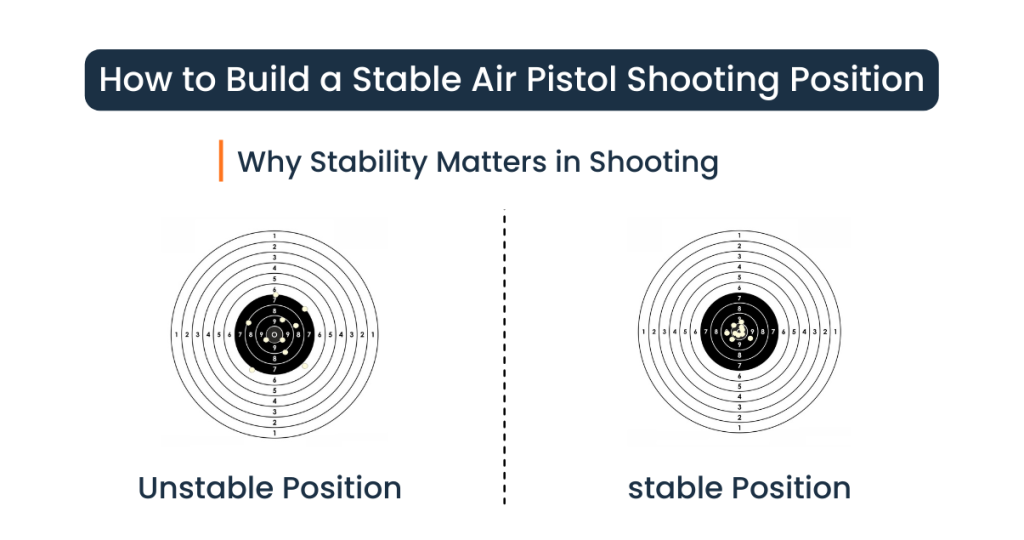
Common Stability Mistakes
Many shooters unknowingly introduce instability into their position through small technical errors.
One common mistake is over-gripping the pistol. When the grip pressure becomes excessive, tension spreads through the hand and forearm. This tension increases tremors and interferes with fine trigger control.
Another frequent problem is locking the knees completely straight. Slightly relaxed knees allow the body to maintain balance more naturally.
Excessive backward leaning is another issue. Some shooters lean too far back to counterbalance the weight of the pistol. This shifts the centre of gravity and places unnecessary strain on the lower back.
Shoulder tension can also reduce stability. The shooting shoulder should remain relaxed so the arm can extend naturally.
Finally, inconsistent foot placement can cause the entire position to change from shot to shot. Marking the stance position during training can help maintain consistency.
Static and Dynamic Stability
Stability in shooting has two components.
Static stability refers to the ability to hold the pistol steadily while aiming. This is primarily influenced by posture, balance, and muscle relaxation.
Dynamic stability, on the other hand, refers to maintaining that stability while the trigger is being pressed.
Many shots are lost during this moment. As the trigger finger moves, tension can spread through the hand and arm, causing the pistol to move off target.
Elite shooters maintain structural stability throughout the entire trigger squeeze.
Training Drills for Stability
Improving stability requires regular and focused practice.
One useful exercise is the wall alignment drill. By aiming at a blank wall at close distance, shooters remove the distraction of a target and can focus entirely on body balance and sight movement.
Another effective exercise is the Natural Point of Aim drill. By closing their eyes while aiming and then reopening them, shooters can determine whether their stance is correctly aligned with the target.
Dry-fire practice is also extremely valuable. Holding the pistol on target during dry-fire sessions builds endurance and strengthens both static and dynamic stability.
Stability Builds Confidence
Perhaps the greatest benefit of stability is psychological.
When the body feels stable, the mind becomes calm. The shooter trusts the position and allows the trigger to move smoothly.
In precision shooting, this confidence often makes the difference between hesitation and decisive execution.
For ISSF 10m Air Pistol athletes, building a stable shooting position is not just a technical skill.
It is the foundation of both physical control and mental confidence.